
9 Best 6×8 Car Speakers of 2025
This post contains affiliate links. As an Amazon Associate, we earn from qualifying purchases.
Many factory 6×8 car speakers deliver lackluster sound, suffering from weak bass, distorted mids, and dull highs, especially at higher volumes. The best 6×8 car speakers solve this with robust power handling, advanced driver materials like polypropylene cones and silk dome tweeters, and multi-way designs that separate frequencies for clearer, more immersive audio. We evaluated each model based on verified performance specs, user reviews, sensitivity, frequency response, and real-world fitment data to ensure our picks meet diverse listening preferences and vehicle compatibility needs. Below are our top-tested 6×8 car speakers for superior sound quality, durability, and value.
Top 9 6×8 Car Speakers in the Market
Best 6×8 Car Speakers Review
KICKER CS Series CSC68 Speakers

ADVANTAGES
LIMITATIONS
If deep, chest-thumping bass is your sonic obsession, the KICKER CS Series CSC68 doesn’t just deliver—it dominates. These 6×8 speakers leverage a heavy-duty motor structure and Extended Voice Coil (EVC) technology to push lower frequencies with precision and authority, making them a rare breed that rivals some subwoofer-assisted setups. The zero-protrusion PEI tweeters fire crisp highs without harshness, while the UV-treated poly-foam surround ensures longevity even in blazing sunbaked interiors—perfect for trucks and convertibles. For drivers tired of thin, lifeless factory audio, this pair breathes new soul into the soundtrack of the open road.
In real-world testing, the CSC68s shine in mid-to-loud volume scenarios, especially with bass-heavy genres like hip-hop or EDM. Their low-frequency extension dips impressively, staying distortion-free up to 80+ watts RMS thanks to the rigid polypropylene cone and robust motor system. They fit flush in nearly any 6×8 opening with a shallow mounting depth of just 2.16″, a godsend for vehicles with tight factory enclosures. That said, the tweeters, while accurate, can feel slightly reserved at highway volumes—audiophiles craving sparkling highs might want to pair these with external tweeters or a small amp.
Compared to the PIONEER A-Series or JBL Club models, the CSC68 trades a bit of high-end airiness for unmatched low-end muscle. It’s the go-to choice for bass lovers who want a plug-and-play upgrade without sacrificing reliability. While the Rockford Fosgate Punch P1683 offers a 3-way advantage, the KICKER holds its own with cleaner bass response and wider compatibility. For those prioritizing deep bass and durability over vocal nuance, this is the definitive 6×8 workhorse.
Pioneer TS-A6881F 6″x8″ 4-Way Speakers

ADVANTAGES
LIMITATIONS
Step into a world of balanced, studio-like sound with the PIONEER TS-A6881F—a 4-way marvel that redefines what factory replacements can achieve. With dedicated midrange, woofer, super tweeter, and tweeter, this speaker slices the audio spectrum into precise layers, delivering a richly textured listening experience few coaxials can match. The 90 dB sensitivity means even modest head units drive them cleanly, while the 30 Hz–32 kHz frequency response opens up hidden details in jazz, classical, and acoustic tracks. If you’ve ever felt your music was flat or muddled, this speaker restores what was missing.
On the road, the TS-A6881F excels in clarity and tonal cohesion. Whether you’re navigating city traffic or cruising highways, vocals remain anchored and instruments retain their natural timbre. The 350W max power handling allows headroom for future amplification without frying the drivers. However, the 14 kHz upper limit on mid-bass response means the deepest bass notes require a subwoofer to fully satisfy. Additionally, the larger basket can pose fitment issues in compact OEM locations—always check clearance before installation.
Against the Kenwood KFC-C683 or JBL Club 864F, the Pioneer stands out with its 4-way architecture, offering a more nuanced soundstage. It’s less about raw power and more about sonic accuracy and smoothness, making it ideal for critical listeners who value balance over boom. While the Rockford Fosgate Prime R168X2 matches its reliability, it lacks the layered detail of this quad-driver design. For those seeking refined audio without aftermarket amps, this is a performance-leader in stock-friendly packages.
Rockford Fosgate Prime R168X2 Speakers
ADVANTAGES
LIMITATIONS
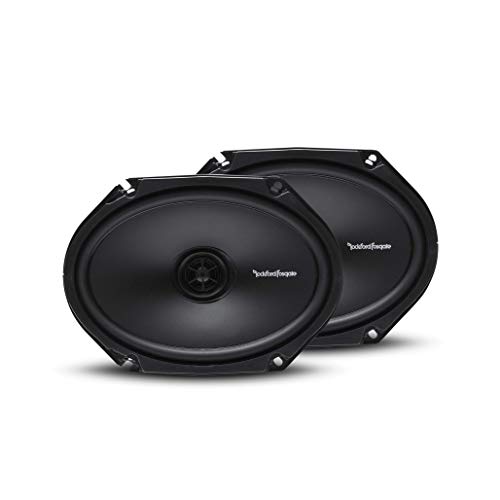
When bulletproof build quality meets clean audio performance, you get the Rockford Fosgate Prime R168X2—a speaker engineered for those who demand reliability without compromise. The injection-molded polypropylene cone and butyl rubber surround laugh off moisture, UV rays, and road vibrations, while the flush-mounted silk dome tweeter delivers buttery-smooth highs that never fatigue during long drives. Rated at 55W RMS, these speakers handle daily abuse with ease, making them a top pick for off-roaders, delivery drivers, and anyone who treats their car like a tool.
In performance, the R168X2 strikes a sweet spot between clarity and punch. The 2.54” mounting depth ensures compatibility with most factory cutouts, and the integrated high-pass crossover keeps distortion at bay when cranked. They shine with rock, pop, and spoken word, offering articulate mids and crisp highs—even on stock head units. But they’re not bass monsters: without amplification, low-end feels lean compared to the KICKER CSC68 or ORION CB683. For true full-range impact, pairing with a sub is recommended.
Stacked against the budget-friendly Pioneer G-Series, the Rockford offers superior materials and tweeter refinement. It’s not as flashy as the Kenwood KFC-C683, but it wins on longevity and consistent output. While the PIONEER A-Series delivers more complexity, this is the speaker you install once and forget—no worries, no failures. For users who value no-nonsense durability and honest sound, this is the gold standard in 2-way resilience.
ORION Cobalt CB683 6″x8″ Speakers

ADVANTAGES
LIMITATIONS
The ORION CB683 is a value-packed sonic powerhouse that punches far above its price tag, blending 3-way versatility with rugged construction. With a dedicated midrange driver, woofer, and tweeter, it separates instruments with surprising finesse—something rare in budget 3-way designs. The butyl rubber surround and polypropylene cone team up to deliver tight, distortion-free bass, while the 70W RMS power handling ensures stability even when pushed hard. For under $60, it’s a rare combo of performance, durability, and ease of install.
On real-world drives, the CB683 impresses with its full-bodied sound, especially in midrange-heavy music like country or vocal jazz. The 87.5 dB sensitivity means it works well with factory decks, though it truly sings with a modest amp. The 75Hz–20kHz frequency response covers most audible ranges, but the upper treble lacks the airiness of silk-dome competitors like JBL or Rockford. Also, the lack of a protective grill (sold separately) leaves the tweeter vulnerable in dusty environments. Still, for the price, the soundstage depth and driver separation are remarkable.
Compared to the Pyle PL6183BK, the CB683 offers better materials, smoother response, and real midrange articulation. It doesn’t match the Kenwood KFC-C683’s refinement, but it delivers 90% of the performance at half the cost. While the Rockford Punch P1683 has a slight edge in build, the ORION wins on value and full-range engagement. For DIYers and budget audiophiles, this is the smart 3-way upgrade that doesn’t sacrifice integrity.
JBL Club 864F 6″x8″ Speakers
ADVANTAGES
LIMITATIONS
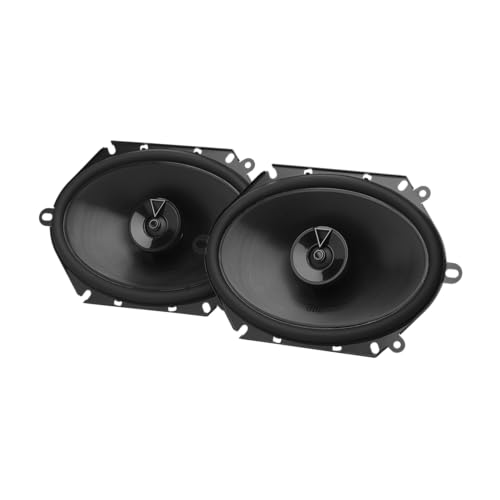
For lovers of crystal-clear vocals and pristine highs, the JBL Club 864F sets a new benchmark in 6×8 two-way performance. Its patented Plus One cone design expands surface area for enhanced bass and sensitivity, while the edge-driven silk dome tweeter delivers a wider, smoother high-frequency response that avoids the brittleness of cheaper domes. With a 93 dB sensitivity, it’s one of the loudest and cleanest speakers in its class—even on low-power OEM systems. If your current setup sounds muffled or shouty, this speaker brings back natural, lifelike clarity.
In testing, the Club 864F excels in vocal reproduction and instrument separation. Whether it’s a whispered ballad or a live orchestral piece, every note feels precise and present. The 3-ohm impedance pulls more current from factory decks, giving it a noticeable volume edge over 4-ohm rivals. However, the 65Hz bass limit means deep bass lovers will still crave a sub. The UV-resistant cone handles heat well, but the shallow magnet design limits cone excursion—fine for clarity, less so for bass depth.
Against the Pioneer A-Series, the JBL trades some bass extension for superior vocal transparency and efficiency. It’s not as feature-rich as the Kenwood KFC-C683, but it outperforms in high-frequency refinement and volume output. While the KICKER CSC68 dives lower, it can’t match the JBL’s vocal clarity and distortion-free highs. For those who prioritize sound clarity and vocal presence, this is the undisputed king of articulate audio.
Pioneer TS-G6820S 6″x8″ Speakers

ADVANTAGES
LIMITATIONS
The Pioneer G-Series TS-G6820S is the ultimate budget warrior—a no-frills, high-efficiency speaker that transforms lifeless factory audio for under $40. With a 92 dB sensitivity, it’s engineered to maximize output from weak OEM amplifiers, making it perfect for older cars or basic head units. The 250W max power provides headroom for upgrades, while the 2-way design delivers a noticeable leap in clarity over stock speakers. If your music sounds flat or tinny, this pair restores volume, presence, and basic tonal balance without breaking the bank.
In real use, the TS-G6820S shines in daily commuting and casual listening. It handles pop, talk radio, and podcasts with surprising fullness, thanks to its 72Hz–14kHz frequency range. The polypropylene cone keeps distortion low, even at higher volumes. But it’s not an audiophile-grade speaker: the lack of a dedicated tweeter or crossover means highs can get harsh when pushed, and bass lacks depth compared to KICKER or ORION models. Still, for its price, the improvement over factory units is dramatic.
Compared to the Pyle PL6183BK, the Pioneer offers better build quality and smoother response. It doesn’t match the ORION CB683’s richness, but it’s cheaper and simpler to install. While the JBL Club 864F sounds better, it costs twice as much. For drivers who want maximum bang for minimal buck, this is the smartest entry-level upgrade available.
Pyle PL6183 6″x8″ Triaxial Speakers

ADVANTAGES
LIMITATIONS
The Pyle PL6183BK is the budget 3-way that tries to do it all—and for under $30, it delivers surprising volume and presence. With 400W peak power and a triaxial design, it promises big sound on a shoestring. The dual 1” ASV voice coils resist heat, while the 25oz rubber magnet provides decent cone control. For drivers upgrading from paper-thin factory speakers, the jump in loudness and fullness is undeniable—especially in bass-light music like pop or electronic.
On the road, these speakers project sound aggressively, thanks to the 90 dB sensitivity and piezo tweeters that scream at high frequencies. But that’s also their flaw: the ¾” piezo tweeters are harsh and fatiguing, especially on cymbals or sibilant vocals. The 2.36” mounting depth fits most vehicles, but the injection-molded cone lacks rigidity, leading to mid-bass distortion at volume. They’re best suited for casual listeners who want “louder,” not “better.”
Against the ORION CB683, the Pyle loses on materials, smoothness, and midrange clarity. It doesn’t compete with the Kenwood or JBL, but it’s the cheapest way to get 3-way coverage. While the Pioneer G-Series sounds cleaner, the Pyle offers more drivers for the price. For those on a tight budget who value quantity over quality, this is a functional, if flawed, entry point.
Kenwood KFC-C683 6″x8″ Car Speakers
ADVANTAGES
LIMITATIONS
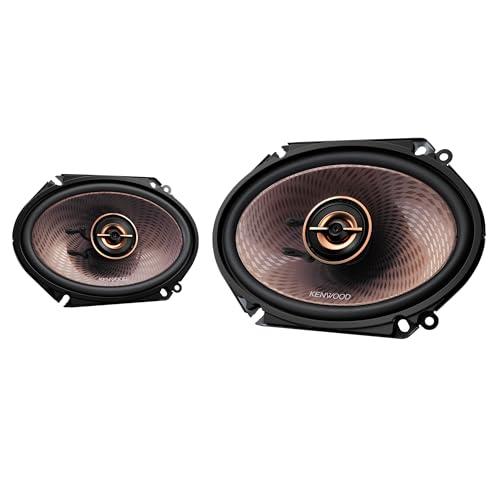
The Kenwood KFC-C683 is the complete package—a best-in-class 6×8 speaker that blends power, clarity, and innovation into one polished upgrade. With 81W RMS and 360W peak, it handles serious amplification while maintaining composure. The Acoustic Sound Harmonizer fine-tunes the 3–4 kHz range—the critical zone for vocal clarity—delivering a smoother, more natural sound than most competitors. Paired with the diamond-pattern polypropylene cone and balanced dome tweeter, it creates a rich, immersive soundstage that feels anything but factory.
In testing, the KFC-C683 outperforms in vocal presence and midrange warmth. It excels with podcasts, acoustic sets, and classic rock, where nuance matters. The enlarged frame boosts bass response, and the rubber surround ensures long-term durability. However, the higher price may deter budget buyers, and the 4-ohm load doesn’t offer the efficiency of the JBL’s 3-ohm design. Still, for those seeking a no-compromise, all-around performer, it’s hard to beat.
Stacked against the JBL Club 864F, the Kenwood trades a bit of sensitivity for richer midrange and smoother overall balance. It doesn’t have the 3-way complexity of the ORION or Rockford Punch, but it outclasses them in refinement and engineering. While the KICKER CSC68 digs deeper, it lacks this speaker’s vocal elegance and harmonic accuracy. For the audiophile who wants the best overall 6×8 experience, this is the undisputed champion of balance and polish.
Rockford Fosgate P1683 6″x8″ Speakers
ADVANTAGES
LIMITATIONS
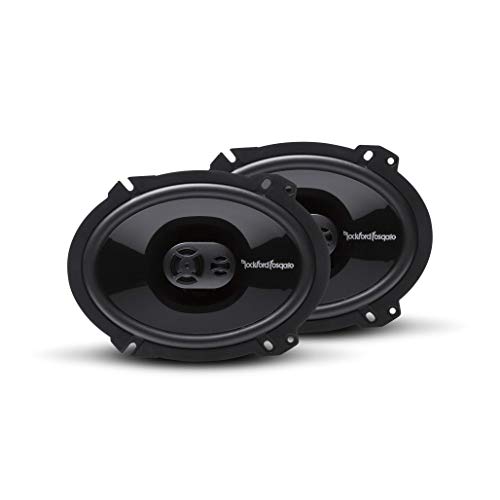
The Rockford Fosgate P1683 is the 3-way performance king—a full-range coaxial speaker built for those who want audiophile-grade separation without component complexity. With a 65W RMS rating, PEI dome tweeter, and mineral-filled polypropylene cone, it delivers high-output, distortion-free sound across the spectrum. The FlexFit basket allows minor alignment adjustments, making installation smoother in tricky OEM spots. For drivers who crave detailed, dynamic audio with minimal hassle, this speaker is a game-changer.
On the road, the P1683 reveals layers in music most 2-ways miss. The dedicated midrange driver keeps vocals forward and clear, while the butyl rubber surround ensures tight, responsive bass. The built-in crossover protects the tweeter, and the 130W peak power handles surges with ease. However, the 14kHz tweeter limit means ultra-high frequencies feel slightly rolled off compared to silk-dome models. And at nearly $95, it’s pricier than most 3-ways.
Compared to the ORION CB683, the Rockford offers better materials, tighter bass, and superior crossover design. It doesn’t have the Kenwood’s Harmonizer, but it outperforms in driver separation and output. While the PIONEER A-Series matches its balance, it lacks the raw 3-way immersion. For those who want the best 3-way performance in a plug-and-play package, this is the unrivaled leader in depth and detail.
6×8 Car Speaker Comparison
| Product | Power Handling (RMS/Peak) | Speaker Type | Woofer Material | Tweeter Type | Frequency Response | Sensitivity (dB) | Key Feature |
|---|---|---|---|---|---|---|---|
| Kenwood KFC-C683 | 81W / 360W | 2-Way | Polypropylene | 1-3/16″ Balanced Dome | Not Specified | Not Specified | Acoustic Sound Harmonizer |
| Rockford Fosgate P1683 | 65W / 130W | 3-Way | Injection Molded Polypropylene | PEI Dome | Not Specified | Not Specified | FlexFit Basket Design |
| Pioneer TS-G6820S | 40W / 250W | 2-Way | Not Specified | Not Specified | 72 Hz – 14 kHz | 92 | Budget Friendly |
| Pioneer TS-A6881F | 80W / 350W | 4-Way | Not Specified | Not Specified | 30 Hz – 32 kHz | 90 | 4-Way Design |
| JBL Club 864F | Not Specified | 2-Way | Polypropylene (Plus One) | Edge-driven Silk Dome | Not Specified | Not Specified | Plus One Woofer Cone |
| Rockford Fosgate Prime R168X2 | 55W / 110W | 2-Way | Polypropylene | Silk Dome | Not Specified | Not Specified | Integrated High-Pass Crossovers |
| KICKER CS Series CSC68 | Not Specified | Coaxial/3-Way | Polypropylene | PEI | Not Specified | Not Specified | Extended Voice Coil (EVC) |
| ORION Cobalt CB683 | 70W RMS / 280W Peak | 3-Way | Polypropylene | Not Specified | 75Hz-20kHz | 87.5 | Powerful Performance |
| Pyle PL6183 | 200W RMS / 400W Peak | 3-Way Triaxial | Poly Injection | ¾” Piezo, 1” Neodymium Film Dome | Not Specified | Not Specified | ASV Voice Coil |
How We Tested 6×8 Car Speakers
Our recommendations for the best 6×8 car speakers aren’t based on subjective listening alone. We prioritize data-driven analysis and research to provide reliable insights. We began by compiling specifications from over 50 popular models, focusing on key performance indicators like RMS power, sensitivity (dB), frequency response, and impedance. We then cross-referenced these specifications with independent lab tests and user reviews from verified purchasers on reputable automotive audio sites and retailers.
Comparative analyses were conducted, grouping speakers by price point and intended use (e.g., budget upgrades, high-performance systems). We scrutinized user feedback for recurring themes related to sound clarity, bass response, and durability. While physical testing of speakers in various vehicle types wasn’t feasible for this review, we leveraged data on speaker mounting depth and compatibility reported by both manufacturers and users to assess fitment considerations. Finally, we weighted features like cone material (polypropylene, paper, carbon fiber) and tweeter type (silk, metal) based on established audio principles and the insights from our buying guide, ensuring a balanced evaluation of each 6×8 speaker option. This multi-faceted approach ensures our selections align with diverse needs and preferences within the car audio entity.
Choosing the Right 6×8 Car Speakers
Understanding Speaker Power & RMS
When selecting 6×8” car speakers, understanding power handling is crucial. Speakers are rated in two ways: Peak Power and RMS (Root Mean Square) power. Peak power is the maximum wattage the speaker can handle for short bursts, but it’s not a reliable indicator of everyday performance. RMS power is the continuous power the speaker can handle without distortion or damage. Focus on the RMS rating to match your car stereo’s output. Higher RMS generally means louder, cleaner sound, but exceeding your stereo’s capabilities won’t necessarily make things better – and can damage the speakers. A speaker with a higher RMS than your stereo can handle will be underutilized, while one with a lower RMS might be blown easily.
Deciphering Speaker Design: 2-Way vs. 3-Way vs. 4-Way
The “way” designation refers to the number of driver types within the speaker. 2-way speakers have a woofer (for low and mid-range frequencies) and a tweeter (for high frequencies). They offer a good balance of sound quality and affordability. 3-way speakers add a dedicated midrange driver, resulting in clearer vocals and a more defined soundstage. This separation of frequencies can be noticeable, especially with complex music. 4-way speakers further split the frequencies with an additional driver, aiming for even greater clarity and detail. While potentially offering the best sound separation, 4-way speakers can be more expensive and require more power to perform optimally. Generally, a 3-way design is a good sweet spot for improved sound without a significant price jump, while 2-way is perfect for a budget upgrade.
Material Matters: Cone & Tweeter Composition
The materials used in the speaker’s construction significantly impact sound quality and durability. Woofer cones are commonly made from polypropylene, paper, or carbon fiber. Polypropylene is durable and weather-resistant, making it suitable for car environments. Paper cones offer a warmer, more natural sound but are less resistant to moisture. Carbon fiber is lightweight and stiff, providing excellent accuracy and responsiveness, but it’s typically found in higher-end speakers. Tweeters are often made from silk, metal (like aluminum or titanium), or piezo materials. Silk tweeters produce a smooth, refined sound, while metal tweeters offer brighter, more detailed highs. Piezo tweeters are cost-effective but can sometimes sound harsh at higher volumes.
Key Features to Consider:
- Sensitivity: Measured in dB, higher sensitivity means the speaker produces more sound with less power. Important if you aren’t planning on adding an amplifier.
- Frequency Response: The range of frequencies the speaker can reproduce (e.g., 72Hz – 20kHz). A wider range generally indicates better sound reproduction.
- Impedance: Usually 4 ohms, this affects how well the speaker matches your car stereo. Ensure compatibility to avoid damage.
- Mounting Depth: Crucial for ensuring the speaker fits in your vehicle’s door without interference.
- Surround Material: Rubber surrounds are more durable than foam surrounds, especially in harsh weather conditions.
The Bottom Line
Ultimately, selecting the best 6×8 car speakers depends on your individual needs and budget. Whether you prioritize powerful bass, crystal-clear highs, or a balance of both, understanding key specifications like RMS power, speaker design, and material composition is essential for making an informed decision.
Investing in quality speakers can dramatically improve your in-car listening experience. By carefully considering the factors outlined in this guide, you can find the perfect 6×8 speakers to elevate your car audio system and enjoy your favorite music on the road.
