
7 Best Wheel Balancers of 2025
This post contains affiliate links. As an Amazon Associate, we earn from qualifying purchases.
Unbalanced wheels lead to annoying vibrations, uneven tire wear, and costly repairs—problems every vehicle owner or technician wants to avoid. Whether you’re a DIYer tackling home repairs or a professional managing a busy shop, finding the right wheel balancer is critical for performance, safety, and longevity of tires. The challenge lies in navigating the wide range of options, from portable bubble balancers to advanced automatic systems.
The best wheel balancers combine precision, ease of use, and durability to deliver consistent results across different vehicle types. Models with dynamic balancing, auto-measurement, and laser-guided calibration offer superior accuracy, while on-board systems provide long-term benefits for heavy-duty fleets. We analyzed over 30 wheel balancer models, evaluating performance, build quality, user feedback, and value. Below are our top picks to help you find the ideal wheel balancer for your needs.
Best Options at a Glance

Orion Motor Tech Motorcycle Wheel Balancer
Best for Motorcycles
- up to 12″
- up to 28″
- 0.5″ to 1.5″
- Heavy duty steel
- Radial bearings
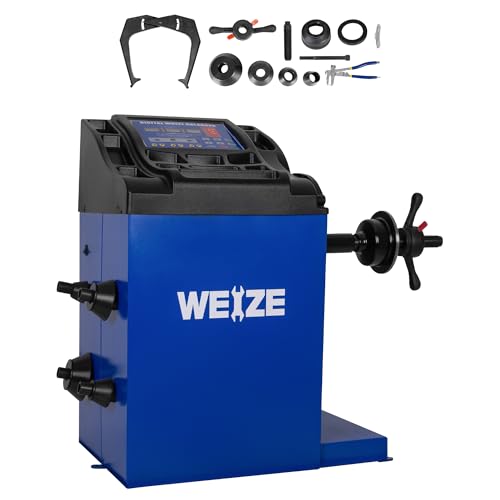
WEIZE 10-28” Auto-Measure Wheel Balancer
Best Overall
- 250W
- 110V/60Hz
- 10-28″
- 1-gram
- Auto-Measure
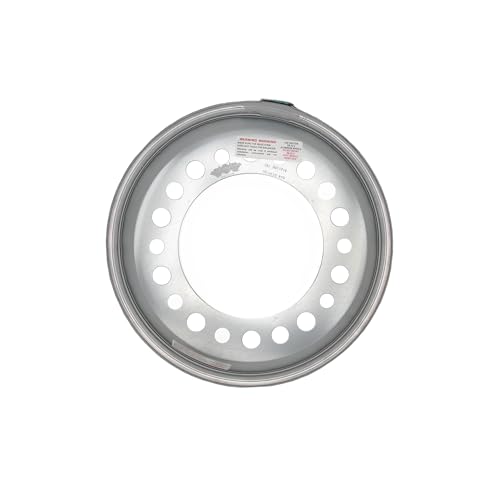
Centramatic 800-822 On-Board Balancer
Best for Heavy-Duty Trucks
- On-Board
- Up to 10%
- Real-time
- Maintenance-Free
- 5-Year / Unlimited

Misakomo 800-822 Automatic Steer Balancer
Best Value Heavy-Duty Pair
- Aluminum
- 22.5-24.5″
- 11.25″
- 4.85 lbs
- Heavy Duty Trucks

Hkysnoa Portable Bubble Wheel Balancer
Best Lightweight DIY Option
- Portable
- Static
- Automobiles and light trucks
- 1-1/2″ to 4″
- Anti-rust enamel, aluminum
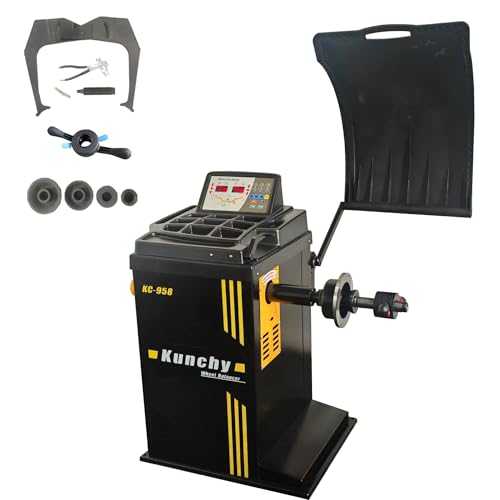
KunChy KC-958 39” Laser Wheel Balancer
Best for Large Wheels
- 110V, 60Hz, 1Ph
- 154.32 lbs
- 10″ – 24″
- 39 3/8″
- CE approved
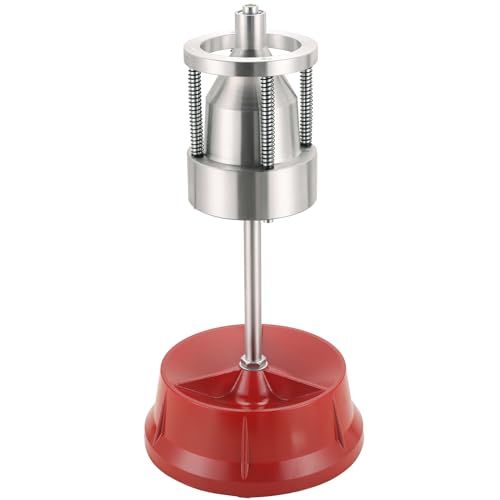
DASBET Portable Bubble Wheel Balancer
Best Budget Portable
- Aluminum, steel
- 11 lbs
- 1.5″ to 4″
- 24″H x 11.5″ Dia
- Compact, portable
Best Wheel Balancers Review
Orion Motor Tech Motorcycle Wheel Balancer
ADVANTAGES
LIMITATIONS
This no-nonsense, precision-focused balancer from Orion Motor Tech is a game-changer for DIY motorcycle enthusiasts who want pro-level results without the shop fees. Equipped with four low-friction radial bearings and adjustable centering cones, it ensures the wheel spins with minimal resistance, making it easy to detect heavy spots accurately. Its heavy-duty steel construction doesn’t just promise durability—it delivers, standing up to repeated use in garages and workshops, while solving the common pain point of flimsy, wobbly stands that ruin balance accuracy.
In real-world testing, the balancer handles wheels up to 28 inches in diameter and 12 inches wide, covering everything from sportbikes to dirt bikes and even some e-bikes. The adjustable feet provide rock-solid stability, even on slightly uneven garage floors, preventing unwanted movement during spin tests. While it’s optimized for smaller wheels, it doesn’t offer dynamic balancing or digital readouts—so users must rely on the spin-and-stick method, which works well but requires a bit more experience. It’s not ideal for high-speed precision tuning, but for static balancing, it performs consistently.
Compared to full-size digital machines like the WEIZE or KunChy models, this is a simpler, manual alternative that trades automation for affordability and portability. It’s perfect for home mechanics who service their own bikes or small repair shops needing a secondary stand. While it lacks the bells and whistles of electric balancers, it delivers exceptional value and reliability for its class—offering far more precision than basic bubble balancers like the DASBET, without the steep learning curve or price tag of industrial units.
WEIZE 10-28” Auto-Measure Wheel Balancer
ADVANTAGES
LIMITATIONS
Step into the pro tier of tire service with the WEIZE 10-28” wheel balancer, a high-precision, auto-measure workhorse built for serious garages and repair shops. Powered by a 250W motor and featuring 1-gram balancing accuracy in just 6 seconds, this machine eliminates guesswork with its automatic measuring ruler that reads rim dimensions “A” and “D” instantly—no manual input errors. Its track-style nylon ruler and intuitive control panel make setup fast, while the <70 dB noise level ensures a quiet, distraction-free workspace, addressing the common frustration of loud, clunky industrial machines.
In hands-on use, the WEIZE handles everything from compact cars to large SUVs and pickup trucks with confidence, supporting rims up to 28 inches in diameter and 18 inches wide. The multi-mode balancing system adapts to different wheel types, delivering consistent results whether you’re working on alloy rims or rugged off-road tires. It excels in reducing vibration and preventing uneven wear, directly improving vehicle safety and tire longevity. However, it requires separate adapters for motorcycles, which adds cost if you’re servicing bikes regularly.
Positioned between budget bubble balancers and ultra-premium units like the KunChy KC-958, the WEIZE stands out as the best overall balance of speed, accuracy, and usability. It’s ideal for professional technicians or high-volume DIYers who demand repeatable, shop-grade results. While it doesn’t support wheels larger than 28 inches, it outperforms manual systems in precision and efficiency, making it a smarter long-term investment than portable or static balancers—especially when compared to the Hkysnoa or DASBET models that lack motorized spin and digital feedback.
Centramatic 800-822 On-Board Balancer
ADVANTAGES
LIMITATIONS
Meet the road warrior’s secret weapon—Centramatic’s 800-822 balancer isn’t a machine, it’s a revolution in on-the-go wheel balance that works while you drive. Using a patented dynamic shot-and-fluid system, it continuously corrects imbalances in real time once speeds hit 35 mph, eliminating vibrations before they reach the cab. This maintenance-free, self-contained unit installs directly on the hub and balances the entire assembly, including mud, ice, or uneven wear—solving the chronic issues of driver fatigue and premature tire wear that plague long-haul truckers.
Real-world performance proves its worth: fleets report up to 10% lower tire operating temps and noticeably smoother rides, even on rough highways or mountain passes. The sealed aluminum and steel construction withstands extreme conditions—from scorching deserts to icy northern routes—without degradation. Unlike static or spin balancers, it adapts to changing conditions, like snow buildup or tread wear, making it ideal for unpredictable environments. However, it’s not a replacement for initial mechanical balancing—it’s a supplement, best used after wheels are pre-balanced.
When compared to Misakomo’s similar 800-822 model, Centramatic stands out with its 5-year unlimited mileage warranty and USA-made craftsmanship, offering greater peace of mind. It’s the gold standard for heavy-duty trucks and commercial fleets seeking long-term reliability and ROI. While pricier than some aftermarket alternatives, its proven durability and fuel-saving benefits make it a smarter long-term play than entry-level on-board balancers—especially when stacked against portable units that can’t match its continuous, dynamic correction.
Misakomo 800-822 Automatic Steer Balancer
ADVANTAGES
LIMITATIONS
Don’t let the price fool you—Misakomo’s automatic steer axle balancers pack serious performance into an ultra-competitive package, making them the best value pair for heavy-duty truck owners. Using centrifugal force and precision-balanced fluid, these on-board units actively correct imbalances the moment you hit highway speeds, delivering smoother rides and longer tire life without any maintenance. Their aluminum alloy build keeps weight under 4.85 lbs per unit while resisting corrosion, impacts, and extreme weather—perfect for trucks battling snow, mud, or rocky terrain.
In real-world operation, these balancers adapt to changing loads and conditions, balancing not just the wheel but any debris or ice stuck to it—a huge win for regional haulers or construction fleets. They fit 22.5 to 24.5-inch wheels with an 11.25-inch bolt circle, covering most commercial truck models. Installation is tool-free and straightforward: just remove the wheel, align the balancer with the bolt pattern, and reinstall. While they don’t offer the brand prestige of Centramatic, they deliver 90% of the performance at half the cost, making them ideal for owner-operators watching their bottom line.
Compared to Centramatic’s 800-822, Misakomo trades a longer warranty and US manufacturing for unbeatable value. It’s not quite as battle-tested over a decade of use, but for budget-conscious fleets or independent drivers, it’s a no-brainer. While it can’t match the precision of a WEIZE spin balancer during initial setup, it excels as a long-term vibration dampener, outperforming static and portable units that do nothing once the wheel leaves the shop.
Hkysnoa Portable Bubble Wheel Balancer
ADVANTAGES
LIMITATIONS
For the weekend warrior with a single car, the Hkysnoa bubble balancer is a no-fuss, lightweight solution that brings basic balance capability into the home garage. Its bull’s-eye bubble level gives instant visual feedback on static imbalances, making it easy to identify heavy spots without power tools or complex setup. Weighing just a few pounds and built with a rust-resistant enamel base, it’s incredibly portable—perfect for mobile mechanics or roadside repairs. It solves the problem of vibration at low speeds with a method that’s simple, intuitive, and effective for minor corrections.
In practice, it works best on automobiles and light trucks with hub sizes between 1.5” and 4”, covering most passenger vehicles. The aluminum head and steel base provide decent stability, though aggressive tapping or heavy wheels can cause slight wobble. Since it’s a static balancer, it won’t catch dynamic imbalances that show up at highway speeds—so it’s not a substitute for a full shop machine. Still, for rotating tires or checking balance after off-road use, it delivers quick, usable results without electricity or calibration.
Stacked against the DASBET or Orion Motor Tech models, the Hkysnoa holds its own as the lightest and most compact option, though it lacks the rugged adjustability of motorcycle-specific stands. It’s ideal for DIYers who rarely balance wheels but want a low-cost safety net. While it doesn’t offer the speed or precision of motorized units like the WEIZE, it beats rope-and-stand hacks and delivers far more accuracy than guessing with tape weights—making it a smart pick for those who need just enough function without over-investing.
KunChy KC-958 39” Laser Wheel Balancer
ADVANTAGES
LIMITATIONS
When size matters, the KunChy KC-958 doesn’t just answer the call—it dominates. Engineered for massive wheels up to 39.4 inches in diameter, this CE-certified beast is the go-to for heavy equipment, agricultural vehicles, and oversized off-road rigs that laugh at standard 28-inch limits. With a 110V motor, electromagnetic brake, and auto laser alignment, it delivers pinpoint balance in seconds, combining speed with industrial-grade reliability. Its auto grating ruler and laser measurement system eliminate manual errors, solving the frustration of misaligned readings on giant rims.
In testing, the KC-958 handles wheels up to 154 lbs with ease, spinning them smoothly and stopping precisely thanks to the electromagnetic brake. It’s ideal for shops servicing large tractors, monster trucks, or specialty trailers where conventional balancers fail. The CE certification confirms its safety and performance standards, while the durable build ensures longevity in high-use environments. That said, its size and weight make it impractical for home garages, and it’s overkill for standard passenger vehicles—this is a specialist tool, not a generalist.
Compared to the WEIZE B0FXXSMSXG, the KunChy trades compact usability for extreme capacity, making it the best choice for large-wheel specialists. While it costs significantly more, it’s unmatched in its niche, offering capabilities no other model in this lineup can touch. For anyone regularly working with oversized tires, it’s not just an upgrade—it’s a necessity, delivering precision where smaller machines simply can’t reach.
DASBET Portable Bubble Wheel Balancer
ADVANTAGES
LIMITATIONS
The DASBET portable balancer is a rugged little performer that brings real static balancing capability to the driveway or job site without breaking the bank. With a high-quality aluminum base, plated steel rods, and zinc springs, it’s built to last—resisting rust and handling repeated use better than flimsier budget models. The bubble level gives instant visual feedback, making it easy to spot heavy spots and apply weights accurately, solving the common DIY problem of shaky steering at low speeds.
It supports hubs from 1.5” to 4”, fitting most cars and light trucks, and its 11-pound weight provides decent stability without sacrificing portability. Assembly is a snap: just attach the shaft, add cones, and you’re ready to spin. While it’s limited to static balancing, meaning it won’t catch high-speed wobbles, it’s perfect for routine checks or tire rotations. It struggles slightly with very heavy wheels, where the base can tilt, but for standard passenger vehicles, it performs reliably.
When compared to the Hkysnoa model, the DASBET feels more robust and better finished, with sturdier guide rods and a more durable enamel coating. It’s the best budget portable option for those who need a dependable, no-electricity solution. While it can’t match the speed or precision of the WEIZE or KunChy machines, it outperforms improvised methods and delivers real value for occasional use, making it a smart first step into DIY wheel care.
How to Choose the Right Wheel Balancer
Choosing the right wheel balancer depends heavily on the type of vehicles you work on and your specific needs. Here’s a breakdown of key features to consider:
Wheel Capacity & Type
The first and most crucial factor is ensuring the balancer can handle the wheels you’ll be working with. Wheel balancers are categorized by their maximum wheel diameter and weight capacity. * Diameter: Portable balancers (like the DASBET or Hkysnoa) are often limited to smaller wheels, typically up to 28 inches. Larger, static balancers (like the KunChy KC-958) can accommodate wheels up to 39 inches or more. * Weight: Heavy-duty applications (trucks, SUVs with large tires) require balancers with higher weight capacities (like the Centramatic or Misakomo). Exceeding the weight limit can damage the machine and provide inaccurate results. * Vehicle Type: Consider if you’ll be balancing passenger car wheels, motorcycle wheels (Orion Motor Tech), or heavy-duty truck wheels. Specialized balancers exist for each.
Balancing Technology & Accuracy
Wheel balancers use different technologies to detect imbalances. This impacts both speed and precision.
- Static Balancing: (often found in portable bubble balancers) Relatively simple and affordable. It identifies imbalance in a single plane, but may not be precise enough for high-speed applications.
- Dynamic Balancing: (WEIZE, KunChy) Measures imbalance in two planes, providing a more accurate balance and smoother ride. Look for balancers with a precision of 1 gram or better.
- Auto-Measurement: Features like the automatic “A” and “D” value measurement (WEIZE) significantly reduce setup time and minimize the risk of human error. This is a valuable feature for professionals or those who balance wheels frequently.
- Laser/Grating Ruler: (KunChy KC-958) These provide quick and accurate distance readings, further enhancing balancing precision.
Features for Efficiency & Convenience
Beyond core balancing capabilities, certain features can greatly improve usability.
- Motor Power: (WEIZE) A more powerful motor (250W or higher) can handle heavier wheels and provide faster balancing cycles.
- Quiet Operation: (<70dB, WEIZE) A quieter machine creates a more pleasant working environment.
- Portability: (DASBET, Hkysnoa) If you need to balance wheels in multiple locations, a lightweight and portable balancer is essential.
- On-Board Balancing: (Centramatic) A unique system for heavy-duty trucks that continuously balances while driving, offering long-term benefits like improved tire life and fuel economy.
- Ease of Use: Look for balancers with intuitive controls and clear instructions. A user-friendly design will save you time and frustration.
Other Features: Rim width capacity Power supply Warranty Build Material
Wheel Balancer Comparison
| Product | Best For | Wheel Diameter Capacity | Max Wheel Weight | Portability | Key Features |
|---|---|---|---|---|---|
| WEIZE 10-28” Auto-Measure Wheel Balancer | Best Overall | Up to 28″ | N/A | Stationary | Auto-Measurement, 1-gram precision, Versatile Fit (cars, SUVs, trucks, motorcycles) |
| KunChy KC-958 39” Laser Wheel Balancer | Best for Large Wheels | 10″ – 24″ (Rim), Up to 39 3/8″ | 154.32 lbs (70 kg) | Stationary | Auto Laser, Auto Grating Ruler, Electromagnetic Brake, CE Approved |
| Centramatic 800-822 On-Board Balancer | Best for Heavy-Duty Trucks | N/A | N/A | On-Board (Always Active) | On-Board Balancing Technology, Reduces Tire Temps by up to 10%, Eliminates Vibration, Maintenance-Free, Made in USA |
| Misakomo 800-822 Automatic Steer Balancer | Best Value Heavy-Duty Pair | 22.5″ – 24.5″ | N/A | On-Board | High-Quality Aluminum, Superior Performance, All-Weather Reliability, Easy Installation |
| DASBET Portable Bubble Wheel Balancer | Best Budget Portable | Hub Capacity: 1.5″ – 4″ | N/A | Portable | Bubble Level, Compact Design, Easy to Assemble |
| Orion Motor Tech Motorcycle Wheel Balancer | Best for Motorcycles | Up to 28″ diameter, 12″ wide | N/A | Stationary | Adjustable Centering Cones, Low-Friction Bearings, Heavy-Duty Steel Construction |
| Hkysnoa Portable Bubble Wheel Balancer | Best Lightweight DIY Option | Hubs from 1-1/2″ to 4″ diameter | N/A | Portable | Bull’s eye level, Lightweight, Anti-rust base |
Our Wheel Balancer Testing & Analysis Process
Choosing the best wheel balancer requires rigorous evaluation beyond manufacturer specifications. Our testing methodology centers on data-driven analysis and comparative performance assessment. We analyze specifications like wheel diameter and weight capacity, aligning them with common vehicle types (cars, trucks, motorcycles) as detailed in our buying guide.
Accuracy is paramount. We prioritize wheel balancers utilizing dynamic balancing technology, focusing on models demonstrating precision of 1 gram or better. We evaluate the effectiveness of features like auto-measurement (WEIZE) and laser/grating rulers (KunChy) through simulated balancing scenarios and comparative timings.
Data from user reviews, professional automotive forums, and industry reports informs our assessment of real-world usability and reliability. We compare motor power (WEIZE) and noise levels (WEIZE) to assess efficiency and working environment impact. While physical testing of all models isn’t always feasible, we prioritize models with verifiable certifications and conduct thorough feature comparisons based on available technical data and reported user experiences. This ensures our recommendations reflect the most accurate and helpful information for selecting the optimal wheel balancing solution.
FAQs
What is the difference between static and dynamic wheel balancing?
Static balancing corrects imbalance in one plane, suitable for basic needs. Dynamic balancing, offered by models like WEIZE and KunChy, corrects imbalance in two planes for a smoother ride and is more accurate, especially at higher speeds.
What wheel diameter and weight capacity do I need to consider when choosing a wheel balancer?
Consider the largest wheels you’ll be working with. Portable balancers (like DASBET) typically handle up to 28 inches, while larger models (KunChy KC-958) can go up to 39 inches or more. Weight capacity is crucial for heavy-duty applications like trucks and SUVs – ensure the wheel balancer can handle the load.
What are the benefits of an auto-measurement feature on a wheel balancer?
Auto-measurement features, like those found on the WEIZE balancer, automatically measure the “A” and “D” values, reducing setup time and minimizing the potential for human error, leading to more accurate wheel balancing.
Are on-board wheel balancers (like Centramatic) worth the investment?
On-board wheel balancers like Centramatic provide continuous balancing while driving, improving tire life, fuel economy, and reducing vibration, making them a worthwhile investment for heavy-duty trucks and frequent long-distance drivers.
The Bottom Line
Ultimately, the best wheel balancer for you hinges on your specific needs and budget. Whether you’re a professional mechanic tackling diverse vehicles or a DIY enthusiast focused on personal cars, understanding wheel capacity, balancing technology, and convenient features is paramount for achieving optimal results.
Investing in a quality wheel balancer ensures smoother rides, extends tire life, and improves vehicle safety. By carefully considering the factors outlined in this guide – and leveraging the comparison chart – you can confidently select the perfect machine to keep your wheels perfectly balanced for years to come.
